

WHAT IS A STEM CELL?
Before a definition, we first need to answer the question “which stem cell?”
There are different types of stem cells
- Embryonic stem cells are stem cells at the first stage of division; even their use in research is subject to specific regulations. They are not within our field of use.
- Adult stem cells = somatic stem cells are the stem cells we will describe here.
Adult stem cells = Somatic stem cells
They are undifferentiated cells found among the differentiated cells of a tissue or organ. They can be found in many tissues, such as the brain, heart, peripheral blood, liver, blood vessels, skeletal muscle, skin, teeth, intestines, testes and ovarian epithelium.
There are at least two types of stem cells in the bone marrow:
- Hematopoietic stem cells
- Bone marrow stromal (mesenchymal) stem cells (Figure 1)

Hematopoietic, i.e. blood-forming, stem cells were discovered in the 1950s and began to be used in treatment. These are stem cells found in the bone marrow that can turn into all blood cells, and they have been used for about 40 years. They are the cells used in the stem cell transplants performed for leukemia, aplastic anemia and some immune system diseases.
Similarly, mesenchymal stem cells have been found to exist in many tissues. The most commonly used of these are bone marrow mesenchymal stem cells. Likewise, adipose-derived mesenchymal stem cells obtained from fat tissue are very frequently used in orthopedic practice.
Where are they and what do they do?
Stem cells can remain without dividing for a long time. When a signal to form tissue arrives, they start dividing for repair or renewal:
Stem cells are very few in number but effective. Stem cells are seen as very attractive cells and are finding use because of
- Their ability to turn into different cells
- Their capacity for self-renewal
- Easy access from different sources (fat tissue, bone marrow)
- Their low immunogenicity.
They can be obtained from different sources. The most practical are:
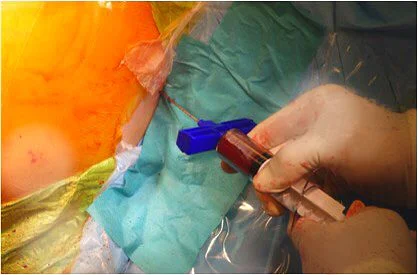
- Bone marrow aspiration: The cells are obtained from the pelvis, the tibia, the heel and other broad bones using specially designed, thick syringe-like instruments, and are made ready for use through special processing. Although not as numerous as fat-derived cells, they are very effective. Bone marrow aspirate concentrate is also called “BMAC”. (Figure 2)
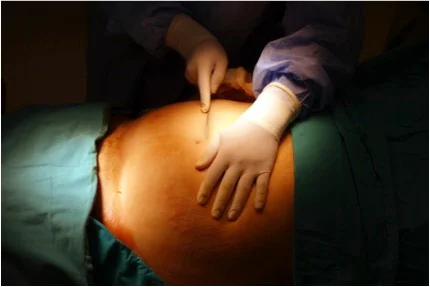
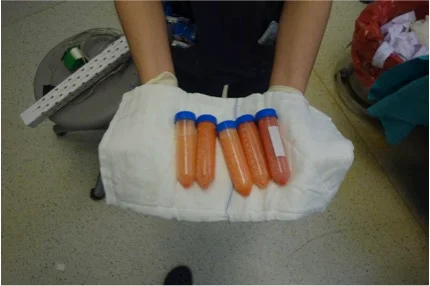
- Fat tissue: The cells are obtained through special processing from fat tissue harvested with special aspiration cannulas, usually from around the navel, the thigh and other areas with plenty of fat. Although it resembles liposuction performed as a plastic surgery procedure (Figure 3), it is not the same procedure. Fat tissue contains more cells than bone marrow: it has 1000 times more MSCs (mesenchymal stem cells) per gram. It is also called the stromal vascular fraction (SVF) (Figure 4).
It is important to note that materials obtained from both bone marrow and fat do not contain stem cells alone. They are fluids containing many cells, including stem cells. The amount of stem cells in them is low, but their viability and effectiveness are quite high. Special methods can be used to further concentrate fresh stem cells. The way to multiply stem cells directly is to culture them in specialized laboratories. However, once removed from the body, stem cells have a limited capacity to divide; so although culturing can produce very high numbers, they may not be as effective as fresh stem cells.
Their clinical uses are very broad, but stem cells may not be suitable for every patient and condition. The main uses of stem cells in orthopedics are listed below.
Joint diseases:
Osteoarthritis and cartilage damage
Chronic tendon conditions:
Tennis elbow, Achilles tendinitis
Sports injuries:
Ligament injuries, ligament repairs, muscle tears
Supporting fracture healing
They can be used in many more areas; however, the common public perception that they heal by producing brand-new cells and rejuvenating tissues is not entirely accurate. Such a contribution can be mentioned, albeit a limited one, but stem cells mostly work through an indirect mechanism by binding to certain pain-producing receptors in tissues. Still, we believe that research to increase their capacity to produce new cells (such as producing special molecules, modifying the environment, and gene silencing or stimulation) will begin to bear fruit in the near future. In our daily practice, we see stem cells mainly as an aid to the main treatment, and we would like to emphasize that they should not replace it. When discussing treatment options for your condition with your doctor, rather than asking directly for stem cells, it is a better approach to ask whether stem cells are among the alternatives and get information about them.