
The structure of the knee joint, like all our other joints, is complex. It has a remarkable structure and balance. When we think about the activities we do during the day thanks to the knee joint, we can understand how much we actually use our knees. The knee joint is involved in many routine activities such as walking, running, sitting, standing up and playing ball.
The knee joint consists of 3 bones: the thigh bone, the shin bone and the kneecap. These 3 bones come together in such a remarkable balance that we can perform many complex movements such as walking and running in a balanced way. Balance is one of the most important elements in life, and it is absolutely essential for the knee joint. This balance is provided by the structures having surfaces that fit each other (cartilage and menisci) and by ligaments holding these structures together.
There are 4 main ligaments in the knee joint. Two of them are right in the center of the knee, one is on the inner side and the other on the outer side. One of the central ligaments starts at the front and runs toward the back, while the other starts at the back and runs toward the front. The one starting at the front is called the anterior cruciate ligament, and the one starting at the back is the posterior cruciate ligament. They are called cruciate because their paths cross each other. The inner and outer ligaments are called the medial and lateral collateral ligaments, respectively.
Among these ligaments, the anterior cruciate ligament is the one we most often have problems with and whose absence we feel most in daily life when it tears.
The anterior cruciate ligament can be torn or injured while playing sports or during daily activities, such as stepping off a curb or getting out of a car. If we feel severe pain in the knee, especially during a sudden movement, hear a popping sound, our knee swells immediately and we cannot continue the activity, we may have torn our anterior cruciate ligament.
In anterior cruciate ligament injuries, the ligament may be damaged or completely or partially torn.

After the injury, we should stop putting weight on the leg, put ice on the knee, try to keep it as straight as possible and see an orthopedic specialist.
After examining you, the orthopedic specialist will order an X-ray and, if necessary, an MRI and plan your treatment.
What might these treatments be?
In early injuries (the first 3 weeks), the torn ligament can be repaired arthroscopically. Medication and a brace may be given.
This can be followed by physical therapy and rehabilitation.
If your ligament is completely torn and you are past the first 3 weeks, treatment can be planned according to your complaints. First, your age, activity level and the complaints caused by the torn ligament are evaluated. If you have complaints of your knee slipping or giving way, surgery is unavoidable. Our clinical view is that anterior cruciate ligament surgery should be performed in young patients. It should not be forgotten that without surgery, it may lead to meniscus tears and early osteoarthritis.
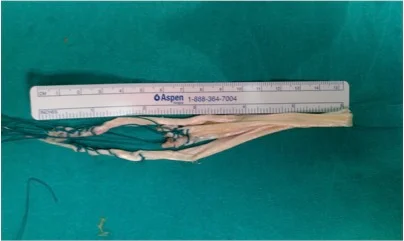
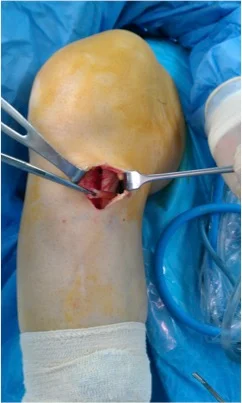
Ligaments taken from cadavers and synthetic ligaments can also be used. Our first choice is tendons taken from the patient’s own body. These are tendons located at the front of the knee or on the inner side of the thigh. These tendons have been used safely for many years.
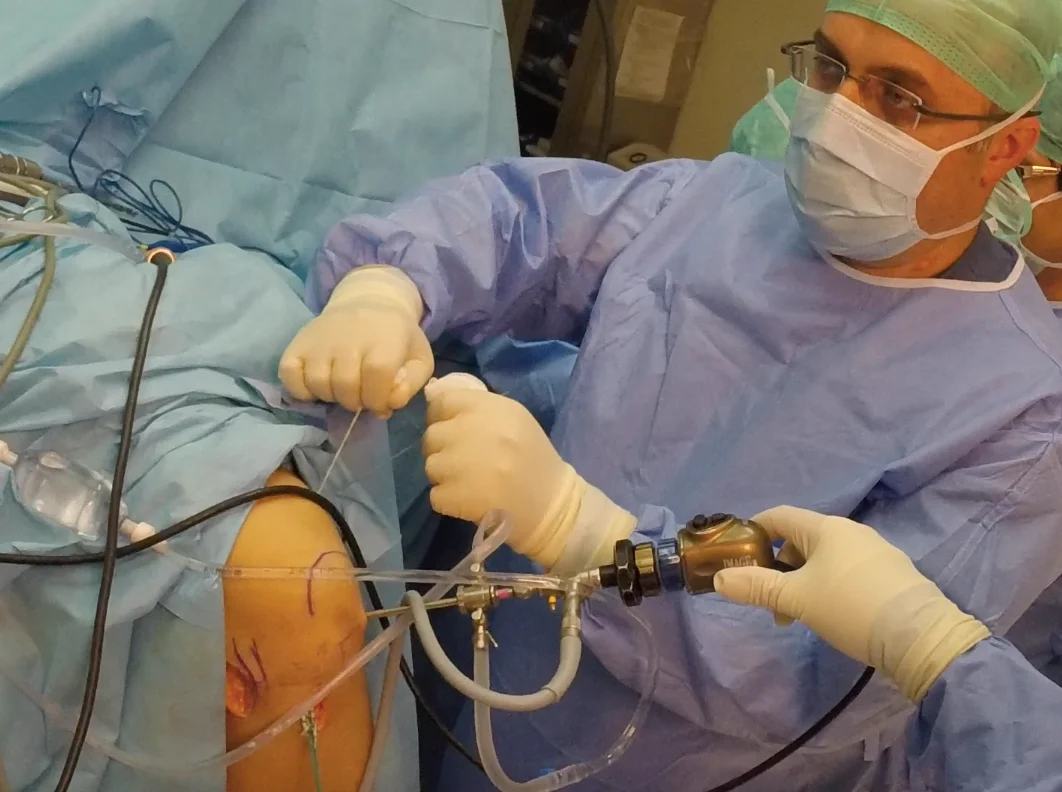
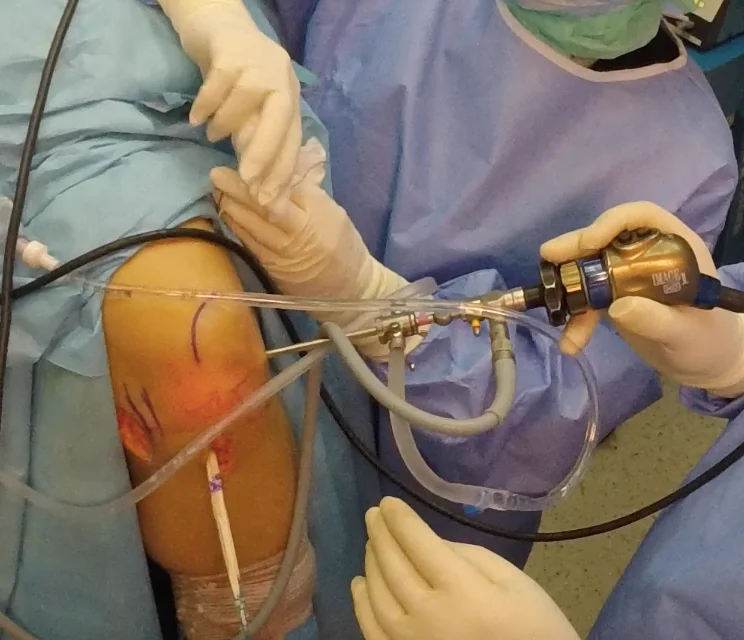
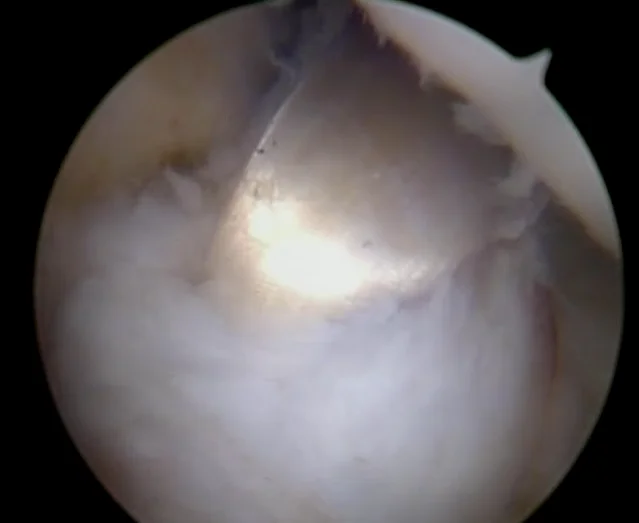
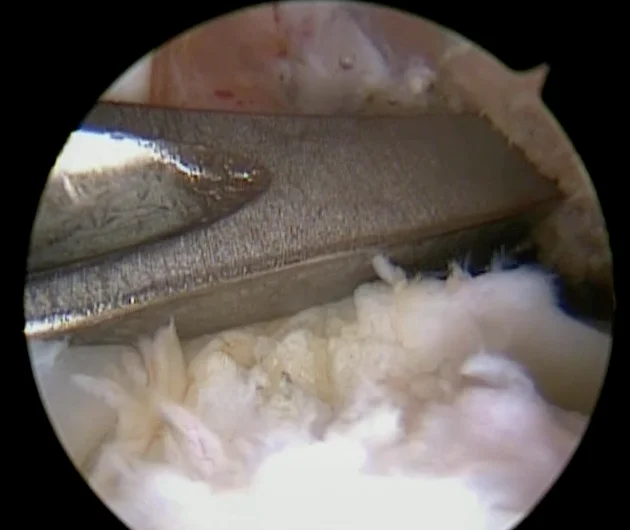
You can find a detailed video of the surgical technique in the video section of our website. The main idea of the surgery is to drill tunnels in the thigh and shin bones with arthroscopy and place a tendon taken from elsewhere into these tunnels.
Anterior cruciate ligament surgery is performed safely today in Turkey and around the world. The most important points are positioning the tunnels very precisely and setting the tension of the ligament during surgery. This way, your ligament lasts a long time. In experienced hands, this is not a very difficult task. Any meniscus tears and cartilage damage are treated in the same session.
With an appropriate rehabilitation program after surgery, full freedom of movement is achieved after about 6 weeks. A program can be followed such as controlled weight-bearing with crutches for the first 3 weeks, full freedom after 6 weeks, permission to run after 2–3 months, and permission for full sports activity after 5–6 months. This program can also be adjusted for professional athletes or according to the patient’s activity level and expectations.
The best thing is for the anterior cruciate ligament never to be injured at all. Training and playing sports consciously and knowing our own limits are the key elements in preventing sports injuries.