

The word robot was first used in the 1920s. It is defined as an electromechanical device that performs the tasks given to it. Robots can mimic the behavior of living beings and can work under the control of an operator or a computer program. As robots have entered every area of life, they have begun to perform many tasks once done by humans. While robots serving humanity make life much easier, a philosophy for how robots should work was established in Asimov’s laws of robotics: “a robot must obey the orders given to it by human beings and may not injure a human being or, through inaction, allow a human being to come to harm.”

Having given this general information about robots, if we look at the use of robots in orthopedic surgery, although robots were first used in endoscopic surgery, the real use of robots in orthopedics does not go back very far. There has been a development process of about 20 years, but widespread use has come only in the last decade.
It first started in the United States and was then introduced in selected countries in Europe. Turkey was among these first countries.
In joint replacement surgery, whether for the hip or the knee, the patient’s worn bones are first cut using templates to fit the prosthesis, and an artificial joint, i.e. a prosthesis, is placed on these newly formed bone surfaces. The most important point is to make the cuts with maximum precision and to place the prosthesis while preserving joint balance. The experience of the surgeon and the quality of the materials used are very important, and these parameters directly affect patient satisfaction and the lifespan of the prosthesis.
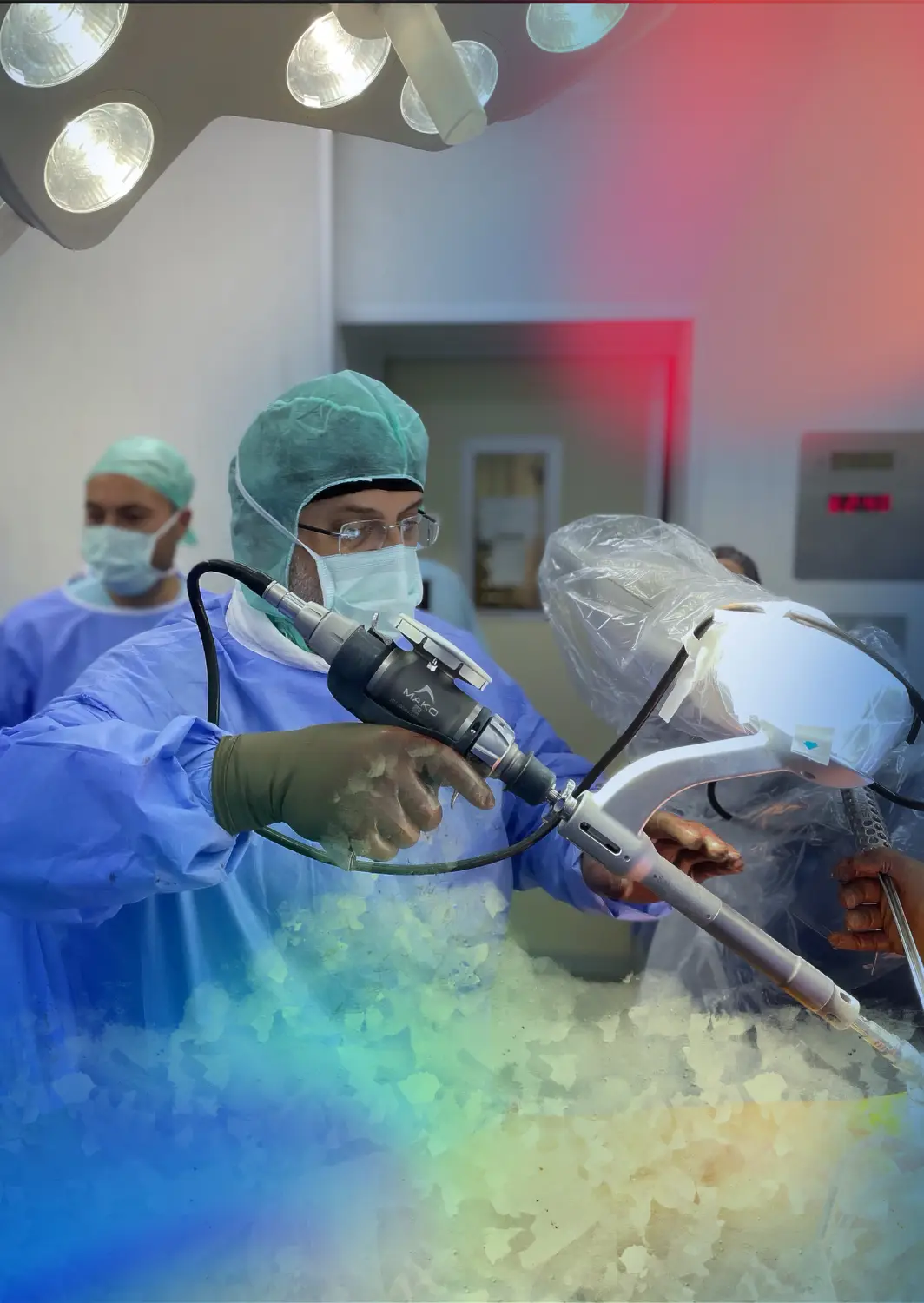
The robots used in orthopedic surgery are not truly fully autonomous robots. Rather, they are devices that assist the surgery. Thanks to the robot, bone cuts can be made more precisely during joint replacement, and the balance and load distribution of the joint being operated on can be adjusted much more finely. However, it is still the orthopedic surgeon who tells the robot how much to cut and at what angle. The surgeon sets the limits, and the robot guides and restricts the surgeon to make the cuts within those limits.

In this case, the surgeon’s experience becomes even more important. When an experienced surgeon and a robot work together in harmony, much better results can be achieved. When they hear the word robot, our patients sometimes imagine a human-shaped machine that performs the operation in place of the surgeon.

In fact, what we call a robot is a system consisting of an arm with a saw or burr attached to its tip, highly advanced computer software, a screen and cameras.

Since robots began to be used in knee and hip replacements, we have started to receive many questions from our patients about this procedure. Let us try to answer the most frequently asked ones here.
How does the process work in robotic joint replacement surgery?
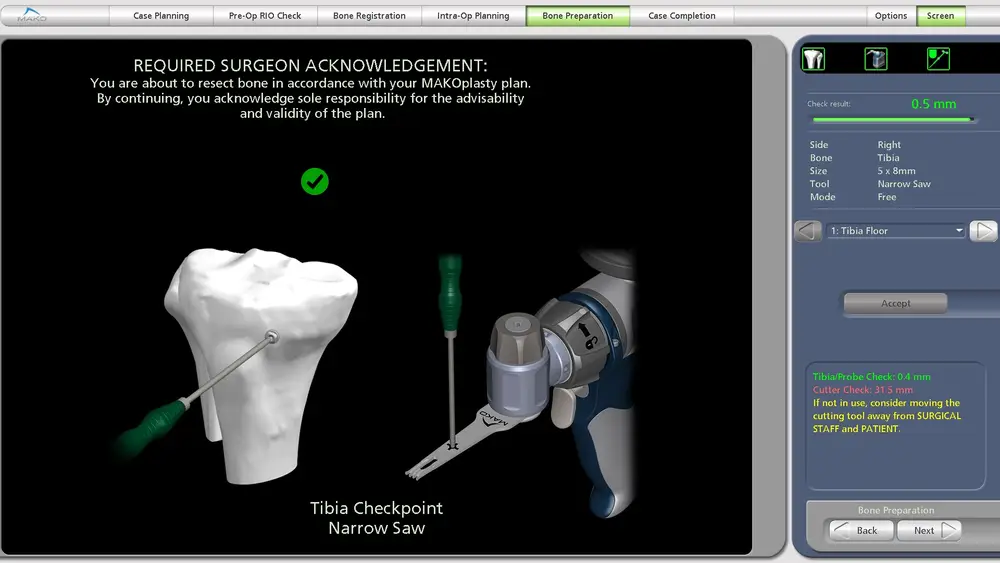
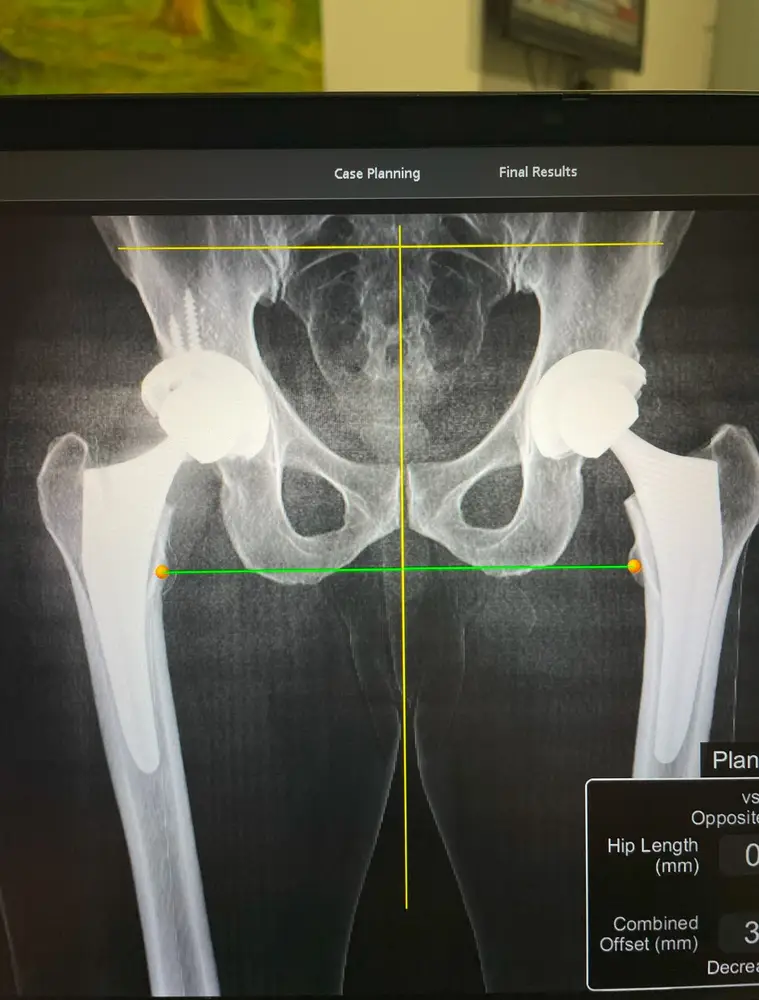
At least one day before surgery, a CT scan is taken and presented to the surgeon with a standard template. Using special software, the surgeon determines what kind of operation will be performed, where the cuts will be made, and what type and size of prosthesis will be used, and the final adjustments are made together with an engineer who specializes in the robotic software system.
In the operating room, surgery begins according to this initial plan, and the patient’s actual bone structure is registered to the robot using sensors, matching the CT model to reality.

If necessary, final corrections and new adjustments are made on the spot on the surgeon’s instructions, and the bone cuts are performed. The fit and balance of the prosthesis are then checked on the patient, both virtually and with trial prostheses.
Once the final configuration is decided, the prosthesis is implanted and checked again. The operation is then completed.
What are the advantages of robotic joint replacement surgery over conventional joint replacement?
- It allows better and more detailed preoperative planning and ensures that the operation proceeds in line with this plan. Because the planning is detailed, it preserves more soft tissue than the conventional method.
- The biggest difference of robotic technology is that, without the need for conventional bone cutting blocks, haptic feedback technology allows bone cuts to be made accurately and precisely within the planned area on a 3D model created from the CT scan and the landmarks registered during surgery.
- With robotic technology, by making the cuts and placing the prosthesis with such precise calculations, the aim is for patients to achieve better functional outcomes after the procedure than with conventional surgical methods. In addition, implant survival rates are expected to be higher than in conventional cases, and the risk of wear and loosening of the prosthesis is expected to be lower. Because the robotic-arm-assisted orthopedic surgery system preserves more soft tissue than the conventional technique, less painkiller use and higher patient satisfaction are expected after surgery. The recovery process is expected to be more comfortable and the return to daily life shorter.
Once robotic joint replacement surgery has been decided, patients do not need any special preparation. A preoperative CT scan is all that is needed. The surgical team will prepare the rest.
As for who the candidates for robotic joint replacement surgery are, we can include all patients who need a hip or knee replacement. If you need a joint replacement, robotic joint replacement is an option for you. In addition, in patients with bone deformities from previous fractures or congenital bone problems, the special calculations and adjustments needed for joint replacement become easier with robotic surgery. This also makes it a preferred choice for surgeons.
One point to keep in mind is that robotic joint replacement surgery is a new technology and offers very significant advantages. However, conventional joint replacement has been performed safely around the world for much longer and in much larger numbers. So even though robotic replacement may be the first choice, conventional joint replacement will always remain a good option.

For patients who cannot have robotic joint replacement surgery, the conventional method is a good option.
As technology rapidly advances and makes life easier in every area, it is our duty as surgeons to evaluate which technologies are more suitable for human health and which do no harm. Without being against technology, we follow it cautiously so that it can enter our daily healthcare practice in a controlled way, and we adopt those that are appropriate into our own practice.