
What Is the Meniscus? What Does It Do?
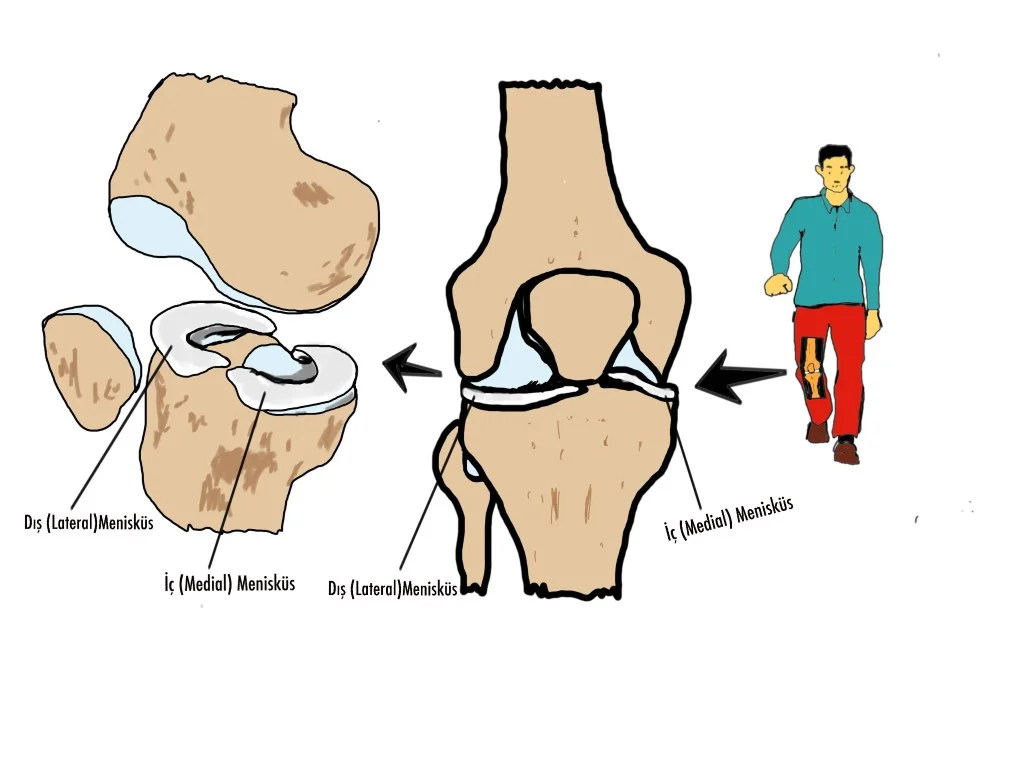
There are two menisci in the knee, the medial and the lateral meniscus. They are made of fibrocartilage (similar in consistency to the outer ear) and act as shock absorbers in the knee. The knee joint is formed by the ends of the thigh bone and the shin bone. The bone ends are hard structures, and to keep them from being damaged when they touch each other, they are covered with an elastic tissue called cartilage. The menisci sit between the joint surfaces to protect them as well. The menisci both act as shock absorbers and help the bony joint surfaces fit each other, so the joint moves smoothly.
What Is a Meniscus Tear? How Is It Treated?
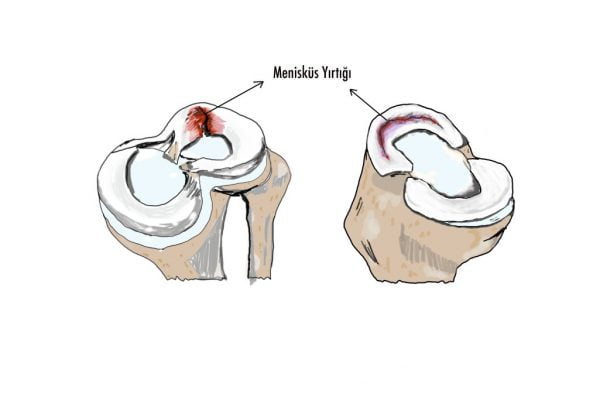
Although the menisci are elastic and slippery structures, they can sometimes get caught between the bones and tear with awkward or sudden movements. There can also be degenerative tears due to aging. Tears can take different forms and cause complaints depending on their shape. Catching, locking, giving way and pain are the main complaints.
A meniscus tear is diagnosed during an orthopedic examination; the diagnosis is confirmed with MRI and the type of tear is determined. At this stage, the treatment to be applied is decided.
What Is Done After a Meniscus Tear Is Diagnosed?
- It is monitored.
- An exercise program is given; physical therapy and medication may be provided.
- Arthroscopic surgery may be performed.
- The torn part of the meniscus is removed.
- The meniscus tear may be repaired with stitches.
Which Treatment Method Should Be Preferred?
The orthopedic surgeon and the patient should decide together which treatment to apply. The first approach in every meniscus case that requires surgery should be repair with stitches. However, most types of tears are not suitable for repair, and the torn part needs to be removed. Removing part of the meniscus is a way of eliminating the source of the problem. A tear that disrupts the harmony of a smoothly working machine will also damage the cartilage in the knee. For this reason, the torn part is removed to prevent further damage, but as a principle, surgery is performed with the approach that the less meniscus removed, the better. Removing only as much meniscus as necessary depends on the surgeon’s experience.
What Should Be Done After Surgery?
If part of the meniscus was removed, the patient can put weight on the operated leg early. Applying ice in the early period after surgery reduces pain and swelling. Muscle-strengthening exercises and physical therapy are very helpful to compensate for the removed meniscus.
If the meniscus was repaired, weight-bearing will be somewhat delayed and more controlled. The goal is to protect the repair from load until the stitched meniscus heals. How much and when weight can be put on the leg, and the range of motion allowed, depend on the repair performed, and your orthopedic surgeon will share this information with you.